Monitor Removal
The Monitor Removal is the pivotal opening event of Ender's Game, in which the International Fleet surgically removes the monitoring device from the back of six-year-old Ender Wiggin's neck, ending his lifelong surveillance and triggering the violent confrontation with Stilson that proves his fitness for Battle School. This event marks Ender's transition from a protected, observed child to a vulnerable individual who must rely on his own brutal instincts, setting in motion his recruitment, his separation from his family, and the moral crisis that defines his entire life.
The Procedure and Its Immediate Aftermath
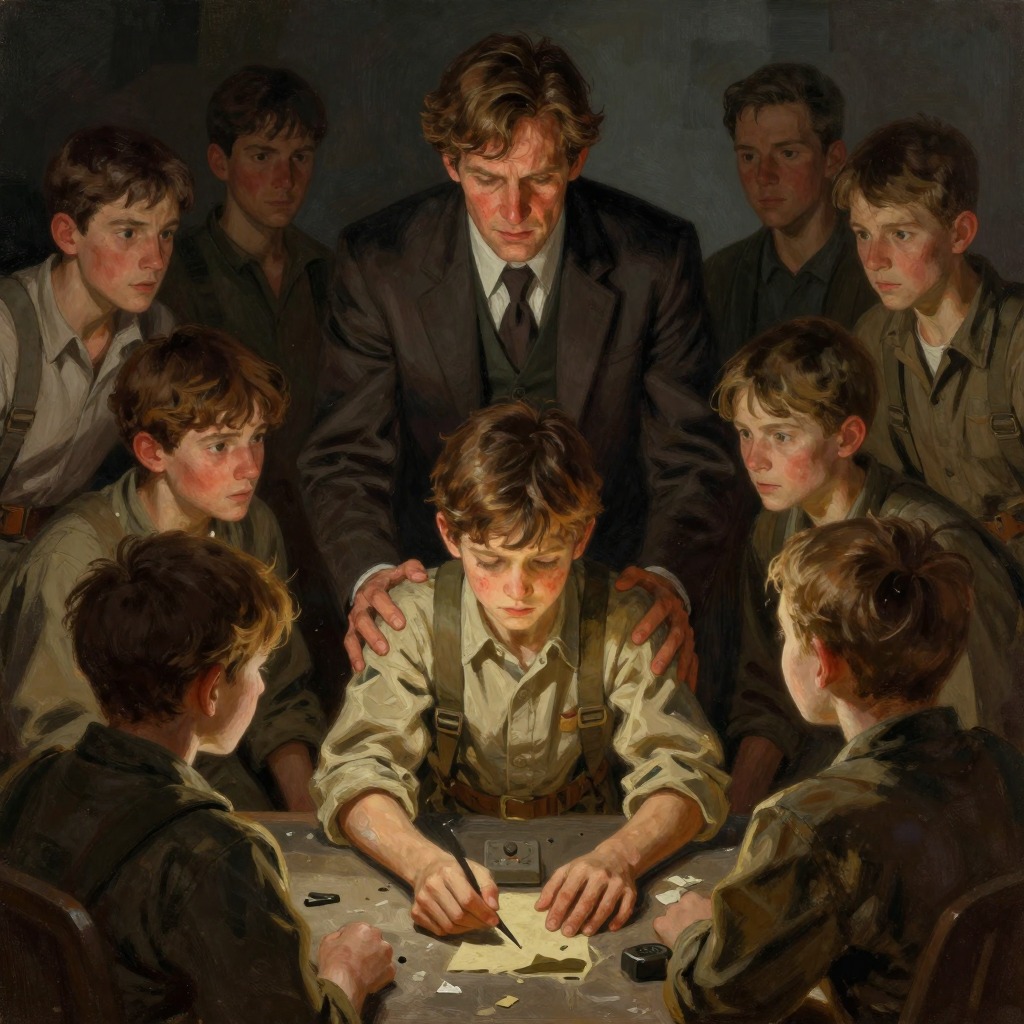
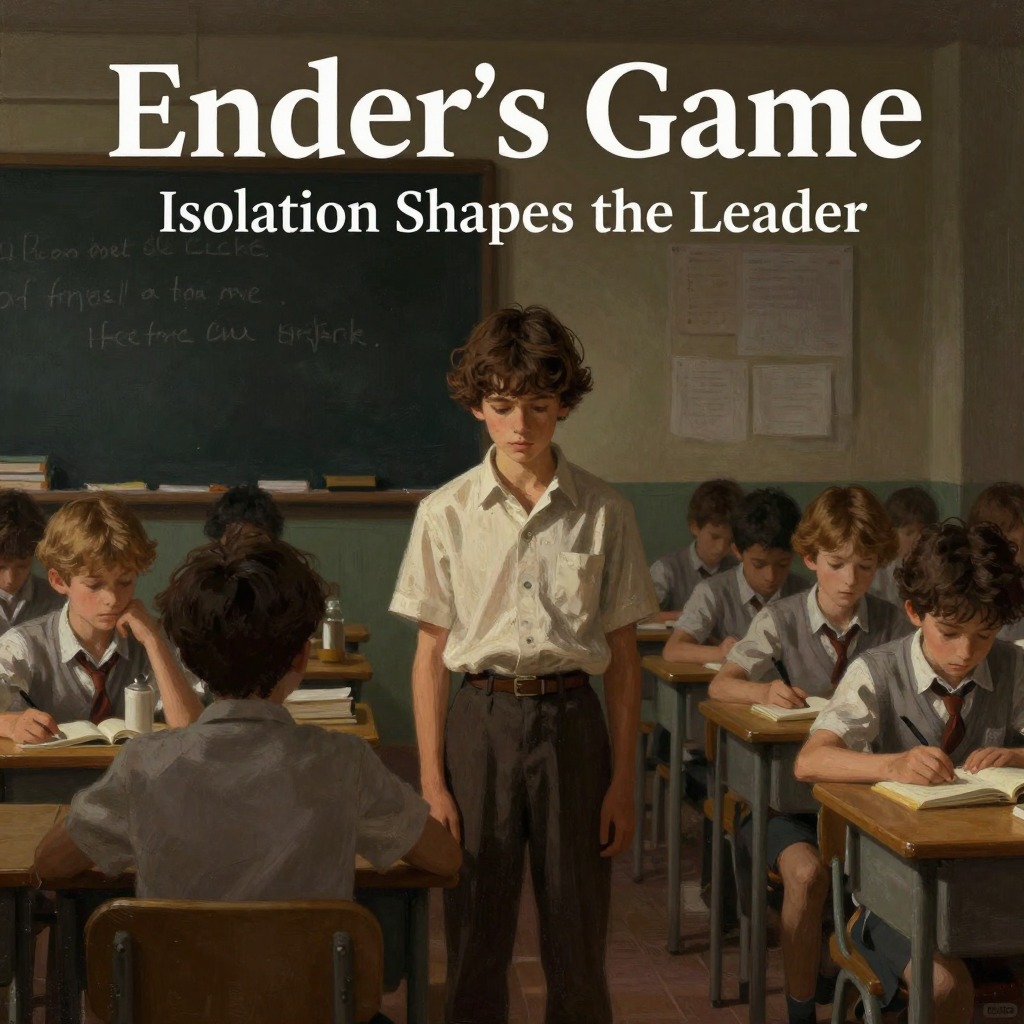
The event begins with the monitor lady's visit to Ender's home, where she cheerfully announces that the monitor will be removed that day, assuring him that "it won't hurt a bit." Ender, however, recognizes this as a lie, having learned that adults say this precisely when pain is inevitable. The procedure itself is far from painless. As the doctor twists something at the back of Ender's head, a pain stabs through him "like a needle from his neck to his groin," causing his back to spasm and his body to arch violently backward. The doctor, visibly trembling, calls for the nurse, and Ender falls off the examining table. A needle is injected into his back, burning as it spreads, finally relaxing his muscles enough for him to cry. The doctor's fear is palpable as he mutters, "They leave these things in the kids for three years, what do they expect? We could have switched him off, do you realize that? We could have unplugged his brain for all time." Ender is kept at the clinic for at least an hour, and when he returns to Miss Pumphrey's class, he is still unsteady, feeling a persistent sense of loss, as if searching for something he cannot name. The girl behind him whispers, "Your monitor," and Ender reaches up to feel the bandaid on his neck, realizing he is now "just like everybody else."
The Stilson Confrontation and Its Consequences
The removal of the monitor immediately exposes Ender to the cruelty of his peers. On his way to the bus, he is confronted by Stilson and his gang, who taunt him as "Third" and "bugger-lover," knowing that without the monitor, no one will come to his rescue. Ender, understanding that "this would not have a happy ending," decides he would rather not be the unhappiest at the end. When Stilson pushes him, Ender kicks him square in the breastbone, dropping him to the ground. But Ender knows he must win this fight "now, and for all time," or he will face it every day. He walks to Stilson's supine body and kicks him again in the ribs, then in the crotch, and finally in the face, blood spattering the ground. He coldly warns the others, "You might be having some idea of ganging up on me... But just remember what I do to people who try to hurt me. From then on you'd be wondering when I'd get you, and how bad it would be." After walking away, Ender leans against the wall and cries until the bus comes, thinking, "I am just like Peter. Take my monitor away, and I am just like Peter." This fight, which puts Stilson in the hospital, is later revealed to be the final test of Ender's character, as Colonel Graff explains that the monitor's removal was the last step in his evaluation, and his actions, though violent, proved he could take care of himself.
The Shift in Family Dynamics
Back home, the monitor's absence changes the dynamics of the Wiggin household. Ender's brother, Peter, immediately notices the bandaid and reacts with a flicker of anger, resentful that Ender kept his monitor until age six while he lost his before five. Peter's cruelty escalates as he forces Ender to play "buggers and astronauts," making him wear the bugger mask and then physically assaulting him, pressing his knee into Ender's belly and whispering threats of killing him. Valentine, Ender's sister, intervenes, threatening Peter with a letter she has written that would expose him if anything happened to them. Peter's rage is only partially contained, and he warns that someday there will be an accident. That night, however, Peter surprises Ender by whispering, "Ender, I'm sorry, I'm sorry, I know how it feels. I'm sorry, I'm your brother. I love you." Ender, peeling the bandaid from his neck, cries for the second time that day, a moment of profound emotional release that underscores his vulnerability and his desperate need for love.
The Event's Role in Ender's Recruitment
The Monitor Removal is not merely a physical procedure; it is the catalyst for Ender's entire journey. The event is orchestrated by the International Fleet as the final test, and its outcome—Ender's brutal victory over Stilson—convinces Colonel Graff that Ender is the one they need. Graff later reveals that the monitor's removal was designed to see how Ender would behave without surveillance, and his actions, though violent, proved he could take care of himself. The event also sets the stage for Ender's recruitment, as Graff arrives at the Wiggin home the next day to invite Ender to Battle School, explaining that the fight with Stilson was not a charade but a necessary test of his motivation. Ender's decision to go, driven by his fear of Peter and his desire to escape, is a direct consequence of the vulnerability he experienced after the monitor's removal. The event thus marks the beginning of Ender's transformation from a protected child into a soldier, a transformation that will be marked by further violence, isolation, and moral compromise.
Thematic Significance and Lasting Impact
The Monitor Removal establishes the central themes of Ender's Game: the loss of innocence, the nature of violence, and the manipulation of children by adults. Ender's immediate reaction—crying and fearing he is "just like Peter"—reveals his deep moral sensitivity and his horror at his own capacity for violence. The event also introduces the idea that Ender is a tool, a weapon to be used by the International Fleet, a theme that will culminate in his unknowing destruction of the bugger homeworld. The monitor's removal is the first of many isolations Ender will endure, and it sets the pattern for his life: he is always alone, always watched, and always forced to make impossible choices. The event's legacy is felt throughout the novel, as Ender's nightmares of Stilson and his fear of becoming like Peter recur, and as he ultimately seeks redemption by carrying the hive-queen's cocoon and writing the Speaker for the Dead. The Monitor Removal is thus not just a beginning but a defining moment that shapes Ender's identity and his entire future.